Tracer Golf

Overview
TracerGolf is Canada’s first fully automated, 24/7 indoor golf driving range with multiple locations across Toronto.
Driven by a love for the game and a desire to make golf practice more accessible, Tracer Golf focuses on affordability, convenience, and helping golfers improve through high-tech, self-guided training in private bays.
The website redesign for Tracer golf focused on simplifying the user journey for new visitors, increase user engagement to reduce troubleshooting calls and making the site easier to update for in-house staff.
Team: UX designer (Kaushani Patel, Katrina Cruz)
Tools: Figma, Figjam, Optimal sort
Skills: Competitive Research, User Research, Information Architecture, Userflows, Wireframing, Web Design
Problem
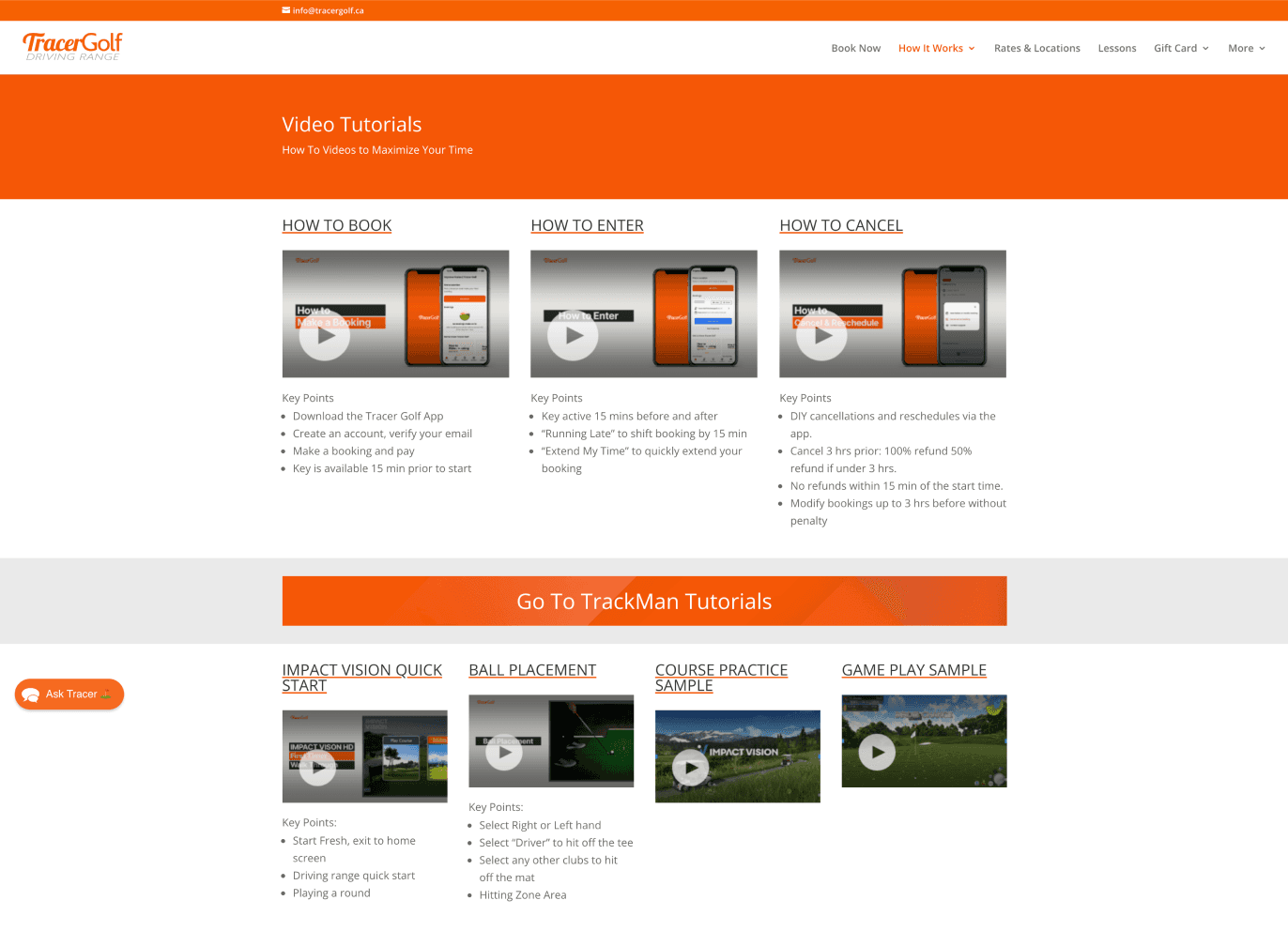
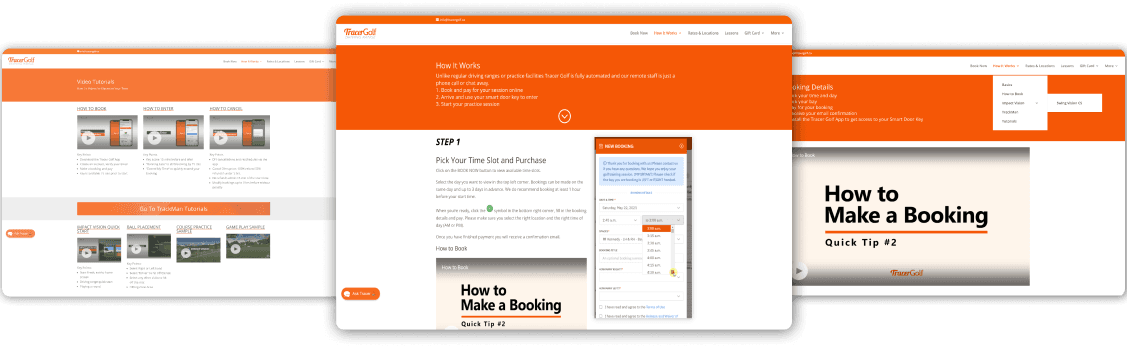
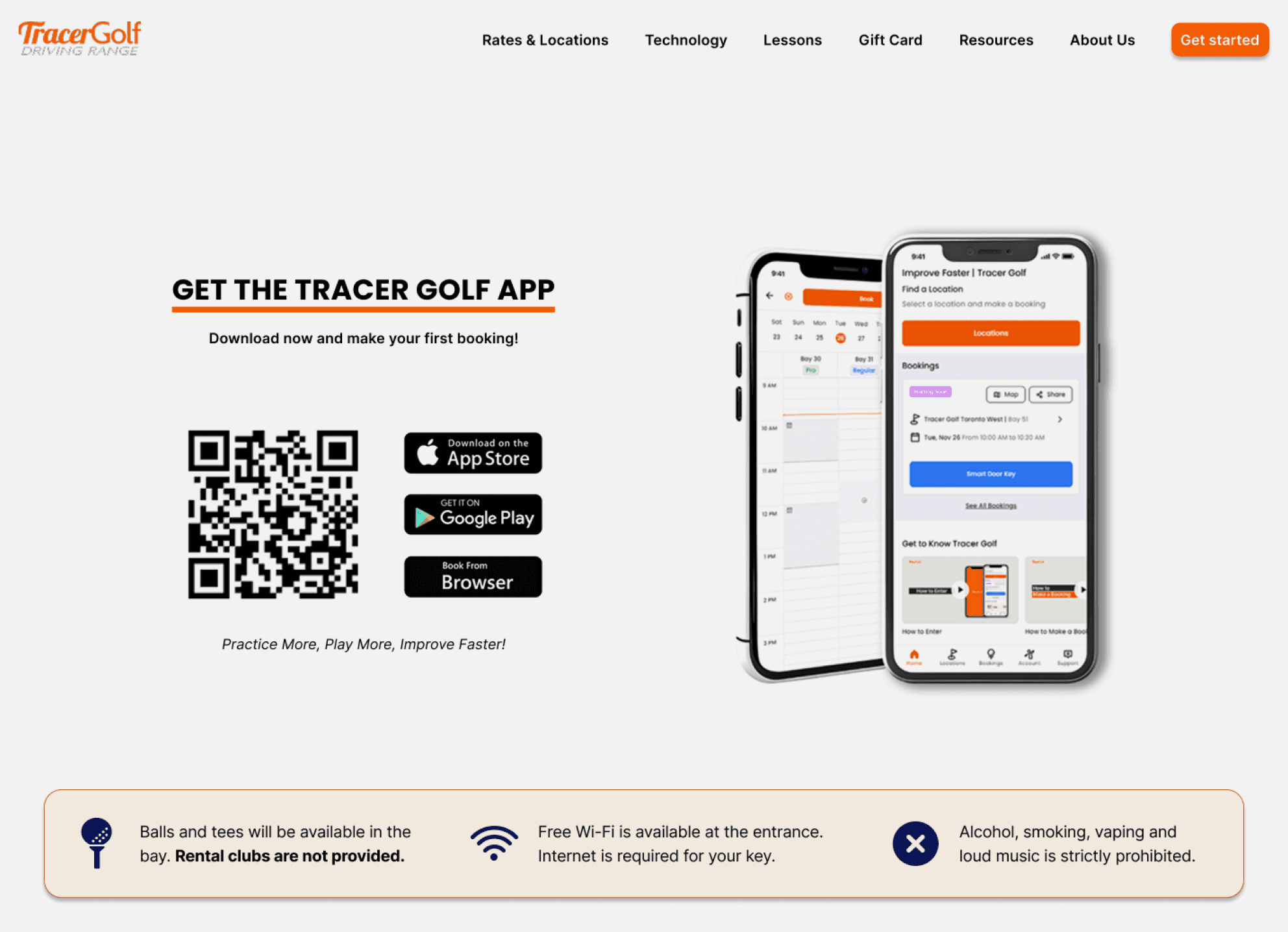
Current help resources are not effective for users.
16% of customer support calls are about navigating the simulator software. This is the number 1 reason for incoming calls, despite the availability of instructional videos throughout the user journey.
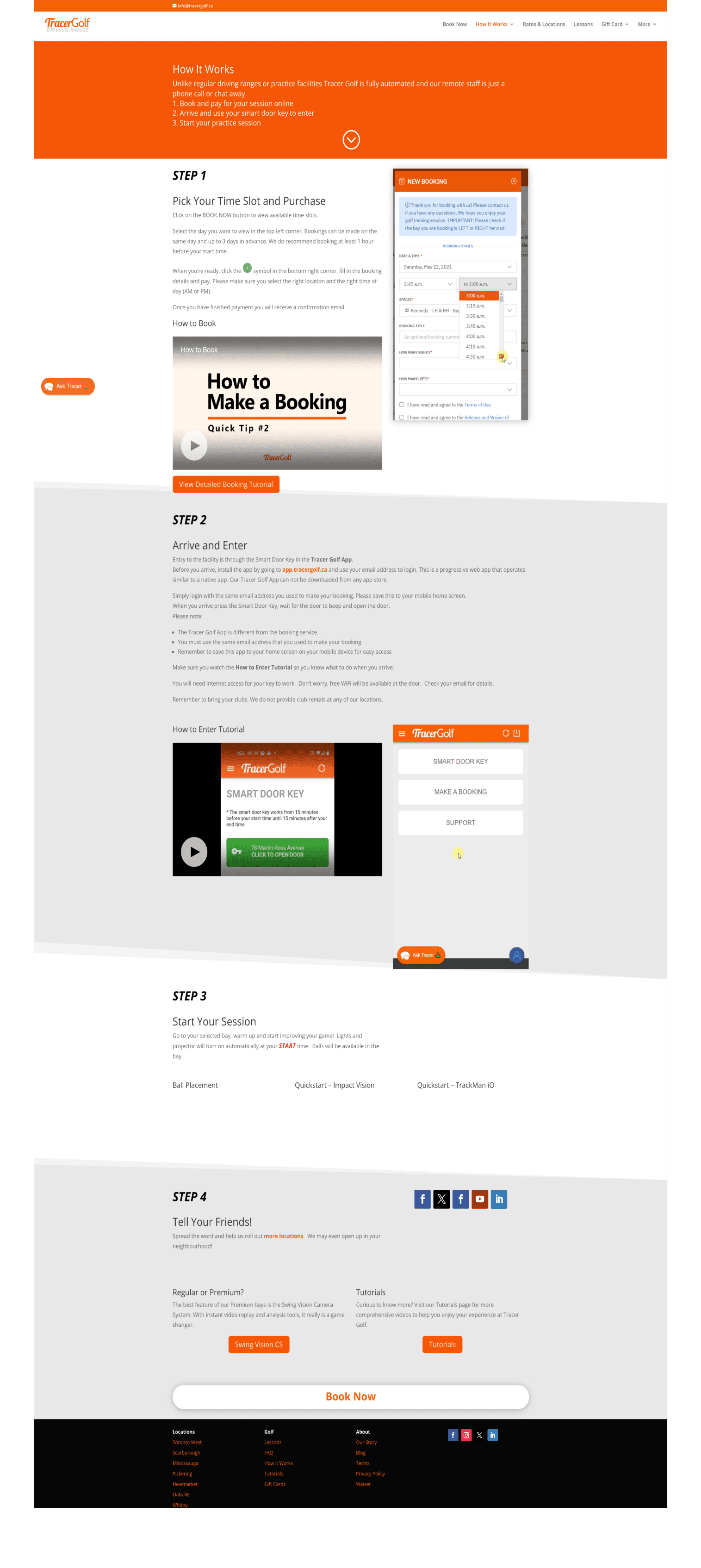
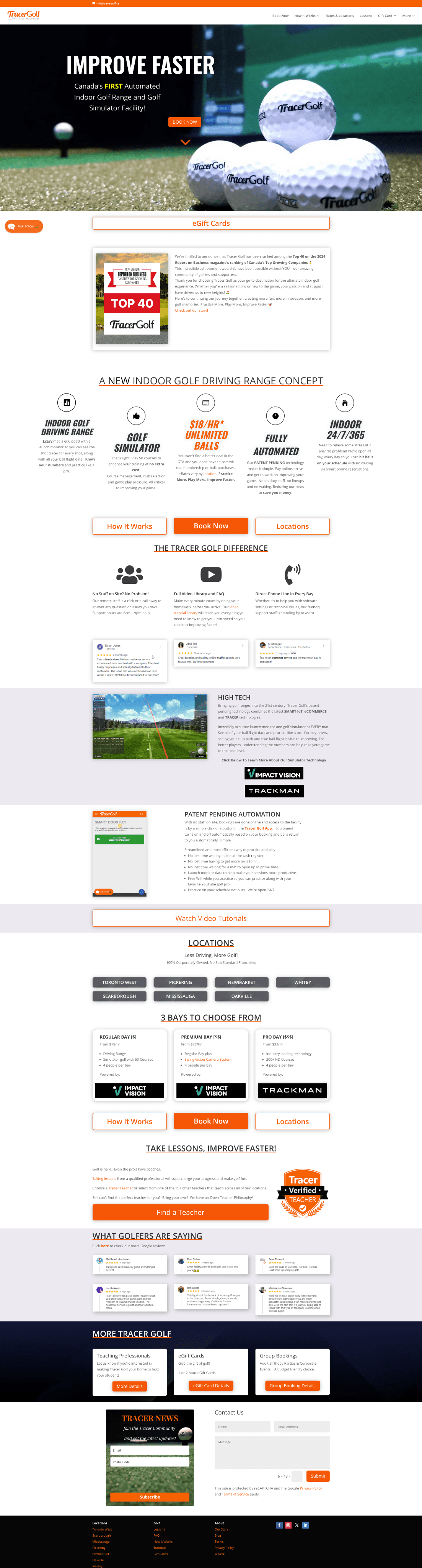
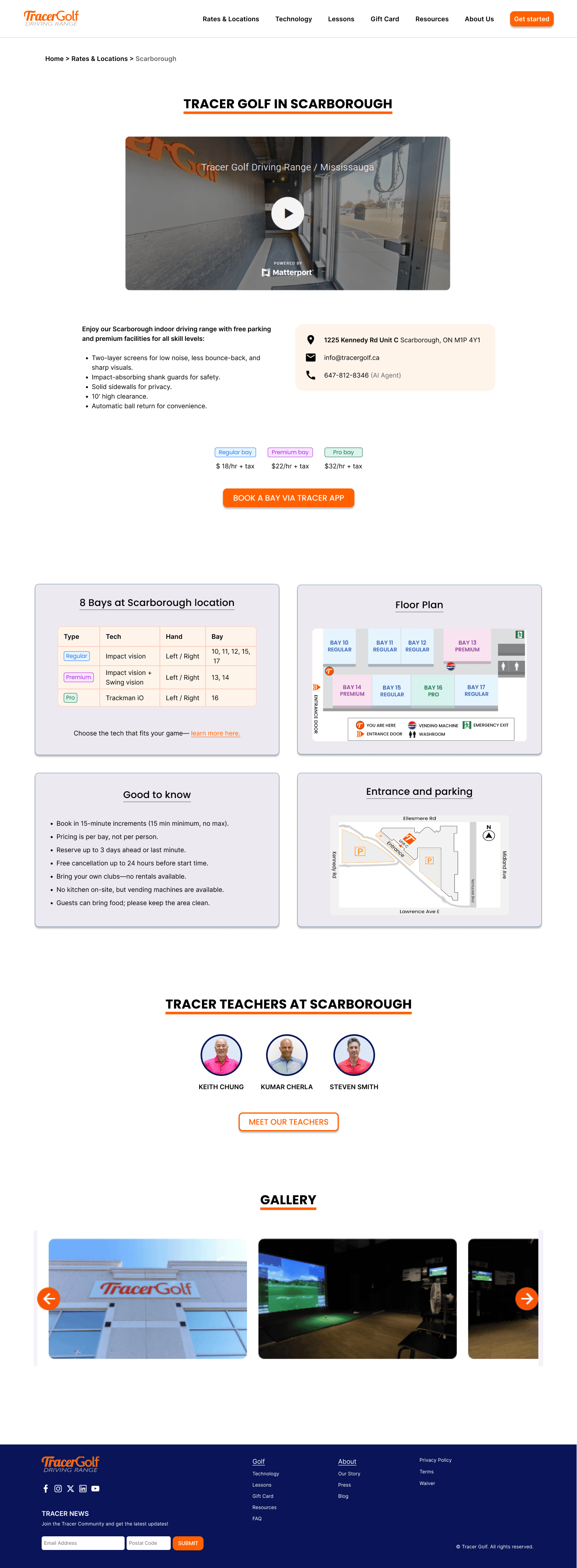
Densely packed content and inconsistent UI
Lack of visual hierarchy and Important information was buried or repeated, increasing cognitive load for users trying to understand the service.
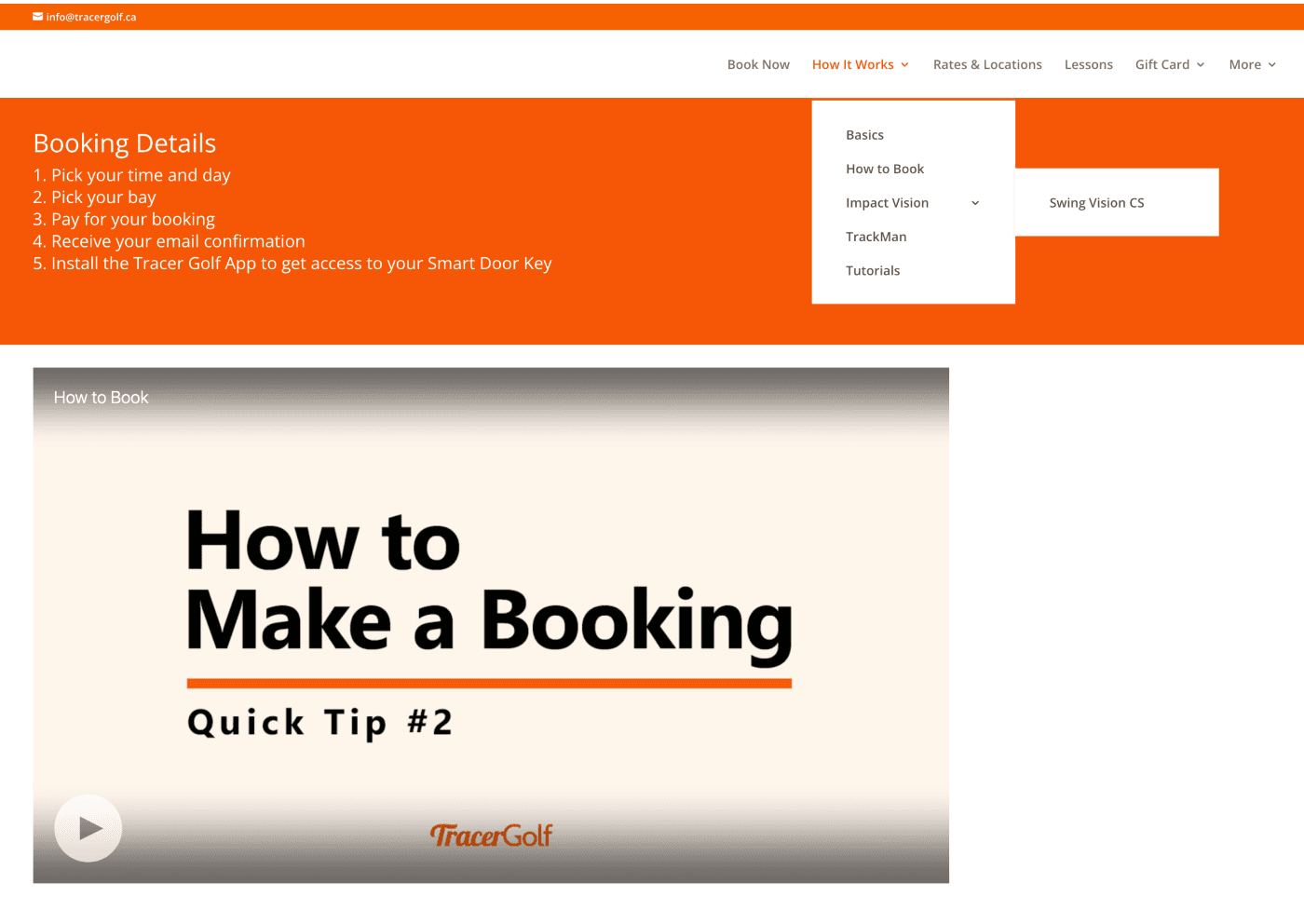
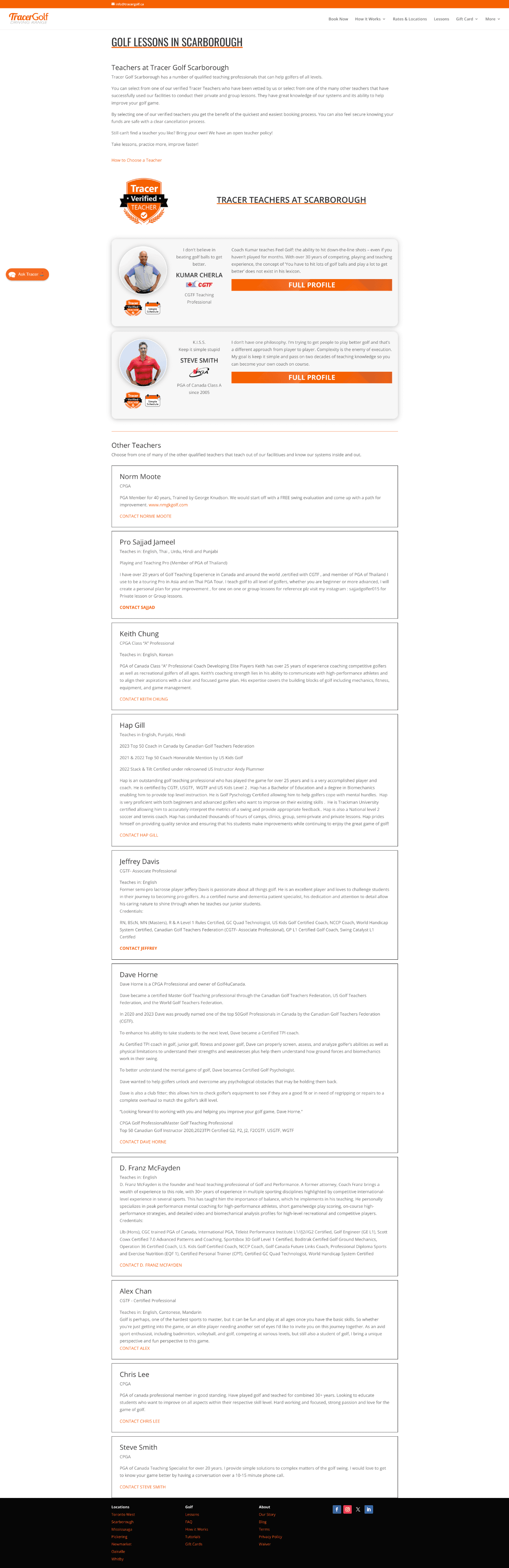
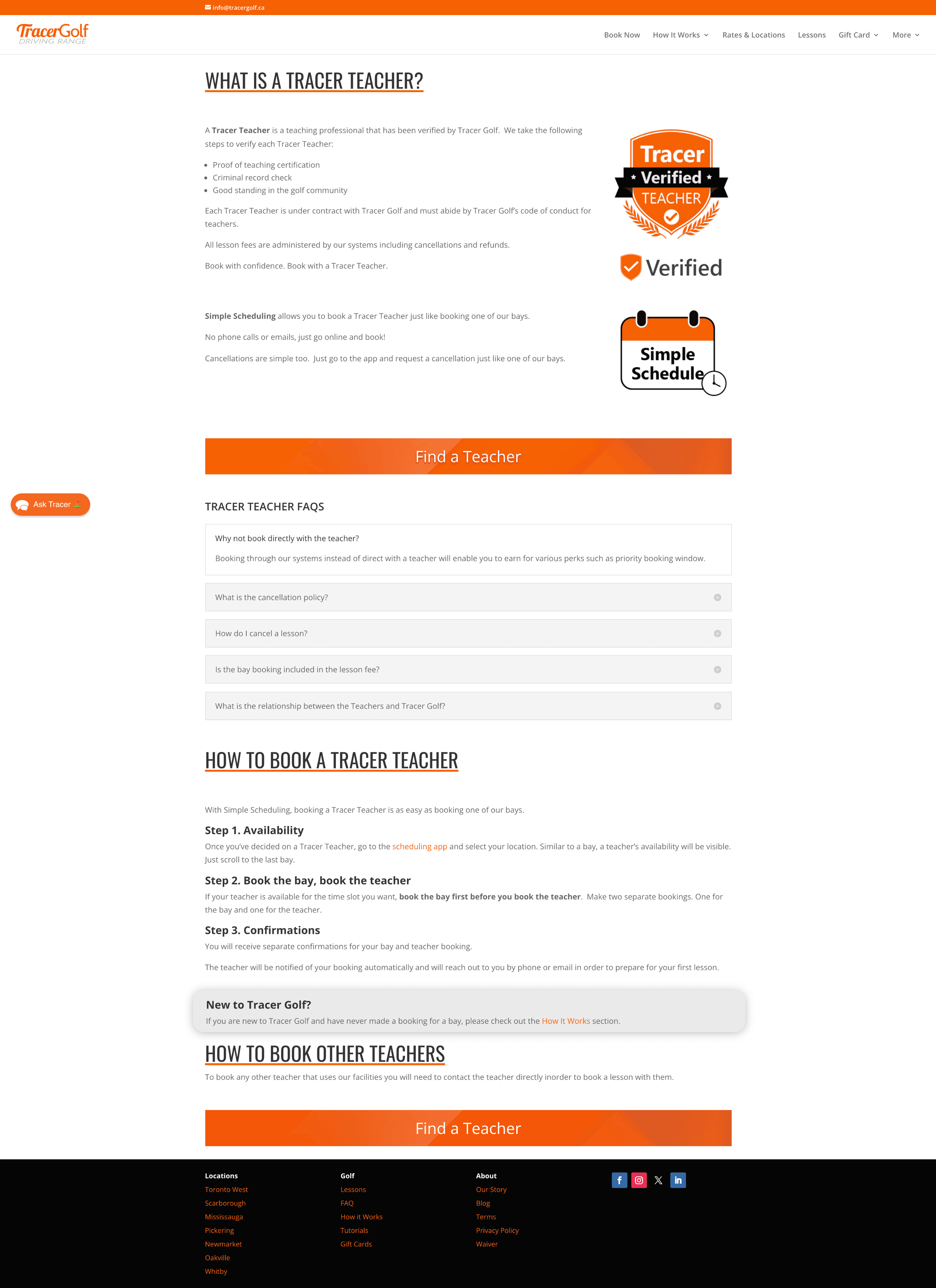
Navigation was highly complex and confusing
Users found it difficult to complete simple tasks. The original site had multiple entry points and inconsistent navigation patterns.
Packed content and inconsistent UI
Before
After

Before
After
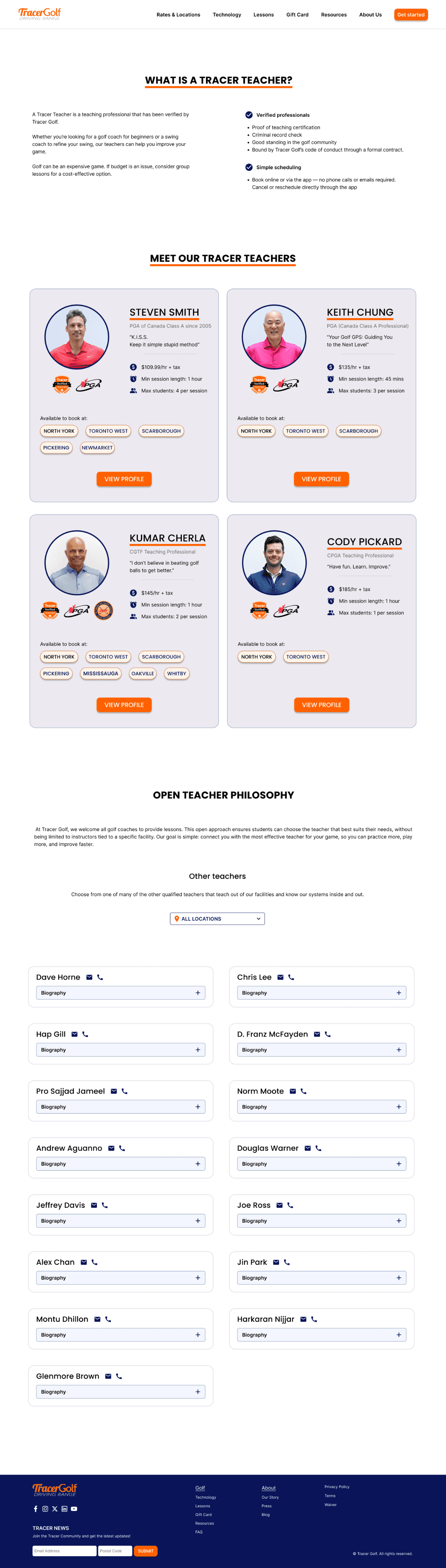
Before
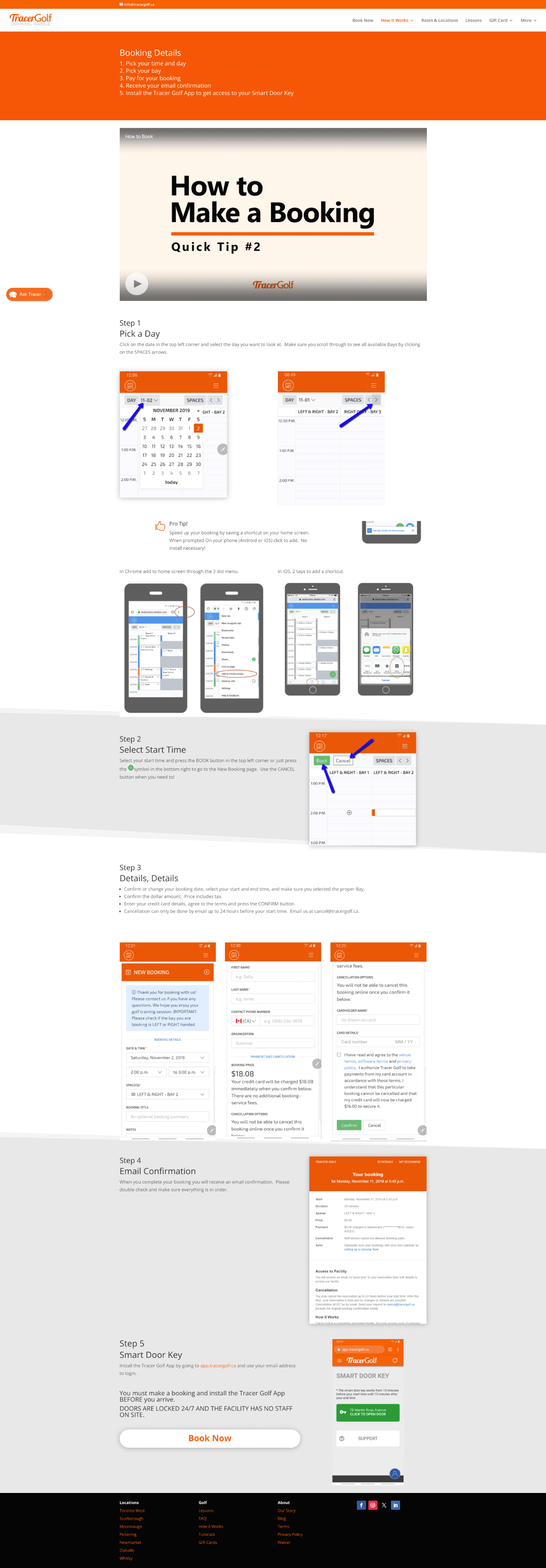
After
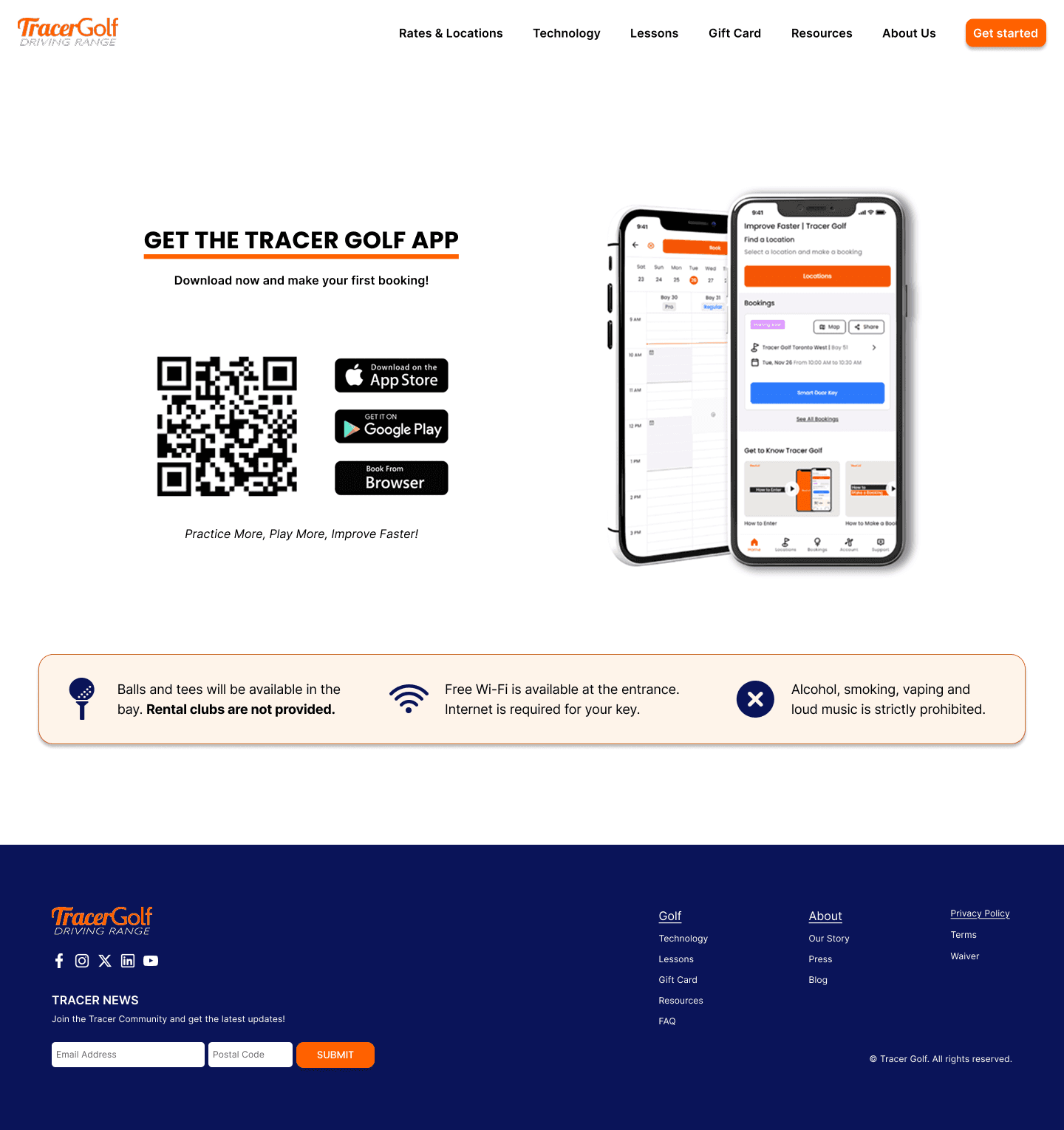
Before
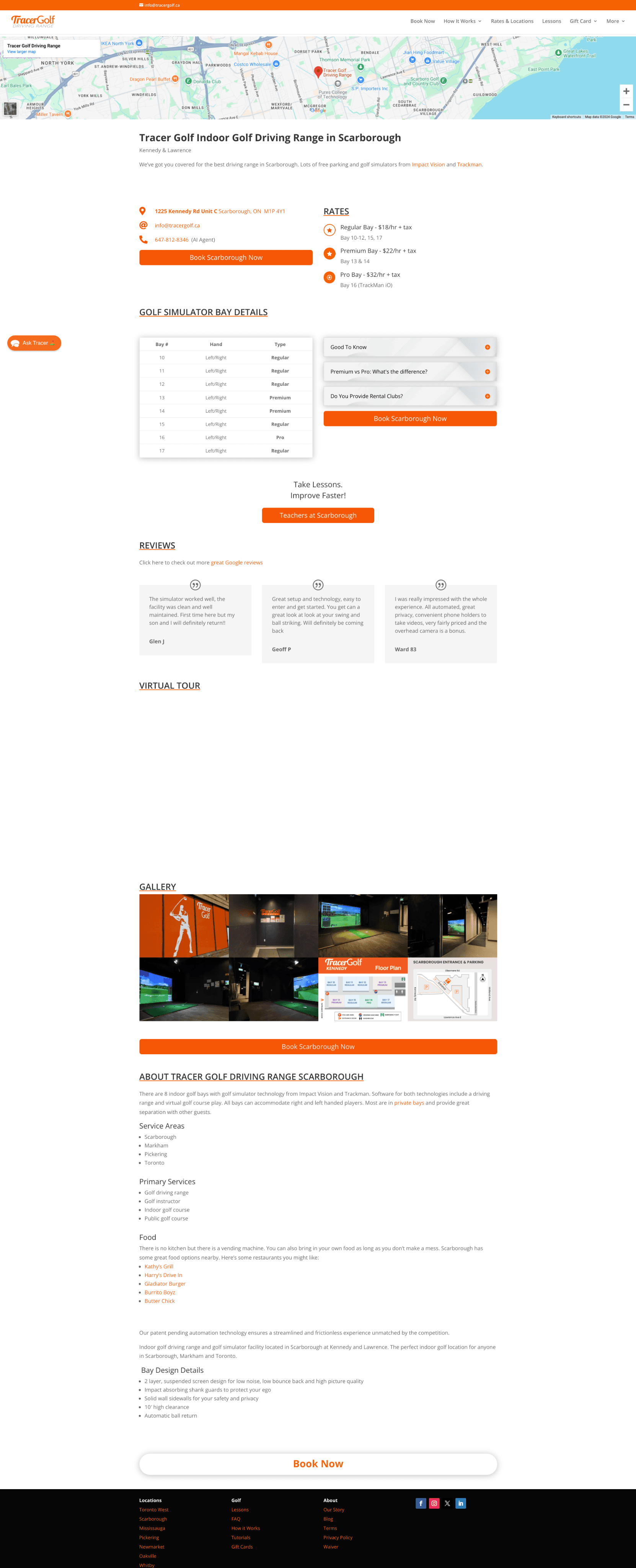
After
Process
Stakeholder vision
During the kickoff meeting, the stakeholder (Toro Lee) outlined a full website redesign with a strong emphasis on improving navigation, clarifying the booking flow, and making the experience more engaging for first-time users.
A key constraint was a four-week timeline, alongside a major product transition: the website would soon serve primarily new users, while all bookings would shift to a new mobile app in development.
The client also highlighted ongoing support issues, with a significant portion of customer calls stemming from users not understanding how to use the system when at the facility.
Existing data shared by the client provided valuable insight into Tracer Golf’s user base and business model. However, because the automated indoor golf space was new to us, we began by reviewing competitor websites from a usability and content-structure perspective.
Venue-based competitors reviewed included Topgolf, Five Iron Golf, Birdie Golf Center, Golf Bunker, and Next Golf. We also referenced technology-based platforms such as Golfzon and Trackman to understand how simulator technology is typically explained to users.
Across the competitor sites reviewed, booking flows and navigation were generally more straightforward than Tracer Golf’s. Since navigation complexity was already identified as a challenge, these sites served as reference points for understanding how simpler booking paths and clearer information hierarchy could reduce user friction.
User interviews
To understand how different users approach indoor golf experiences, we conducted five user interviews within the project timeline.
5 Participants were selected to represent a range of familiarity with golf and simulator-based facilities. These included beginner, casual and competitive golfers.
Insights from the interviews were synthesized using affinity mapping to identify recurring patterns in user expectations, learning preferences, and points of friction across the website experience.
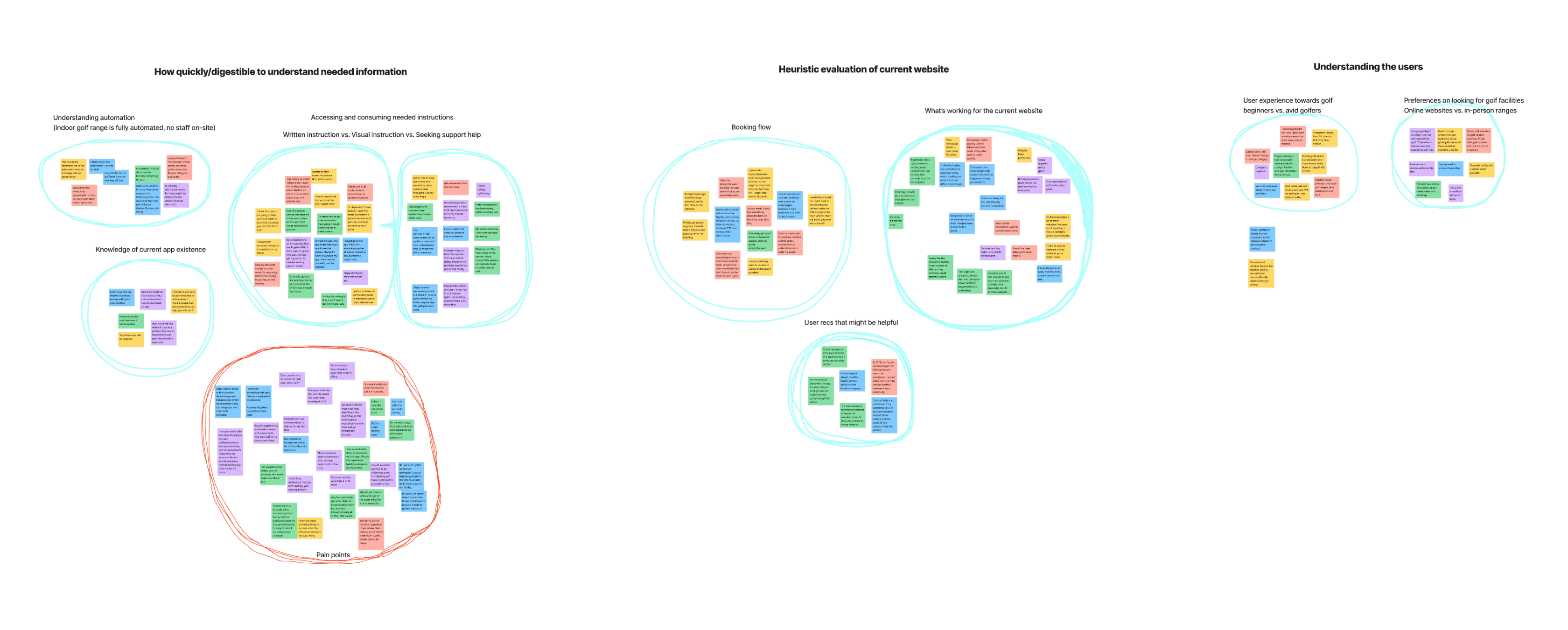
Affinity mapping revealed several recurring themes across users with different experience levels, highlighting where the website struggled to support them:
Problem 1.
New users visiting Tracer Golf’s website feel confused by the current multi-step booking process, which involves navigating between multiple platforms and apps.
Problem 2.
New users need help understanding how to use Tracer Golf’s simulators, and often skip tutorial videos, which leads to increased customer support calls.
Problem 3.
Users need concise and visually appealing explanations to quickly understand how to navigate the website and use the facility.
Since data confirmed that most of the user’s pain points were about difficulty finding information and navigating, we focused the redesign on the following questions:
How might we streamline the booking process to make it more intuitive and user-friendly for new users?
How might we ensure users view the tutorials at the most critical moments of their journey?
How might we present key information in a visually engaging way that resonates with both novice and experienced golfers?
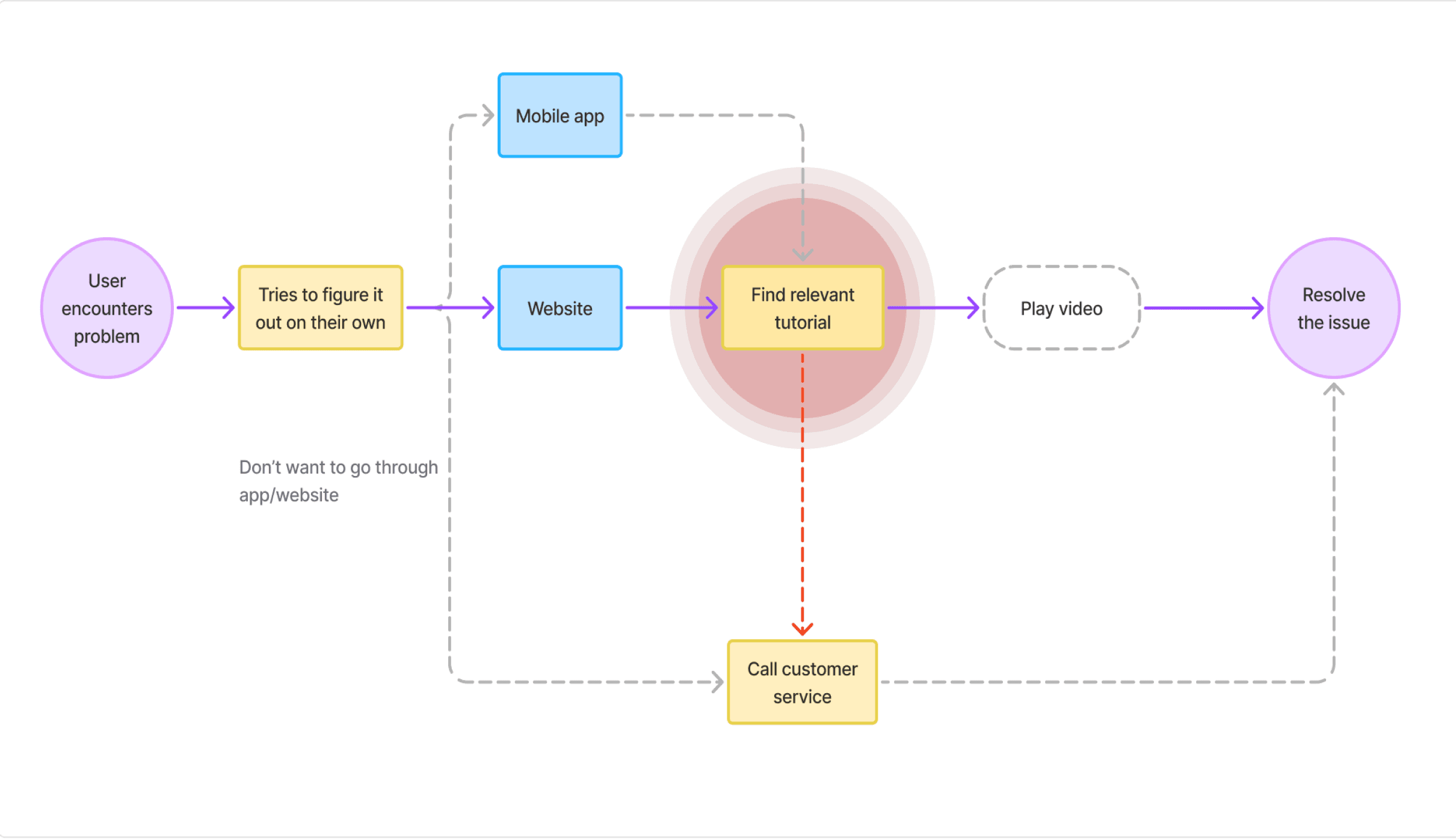
Current flow for when a user encounters problem at the facility.
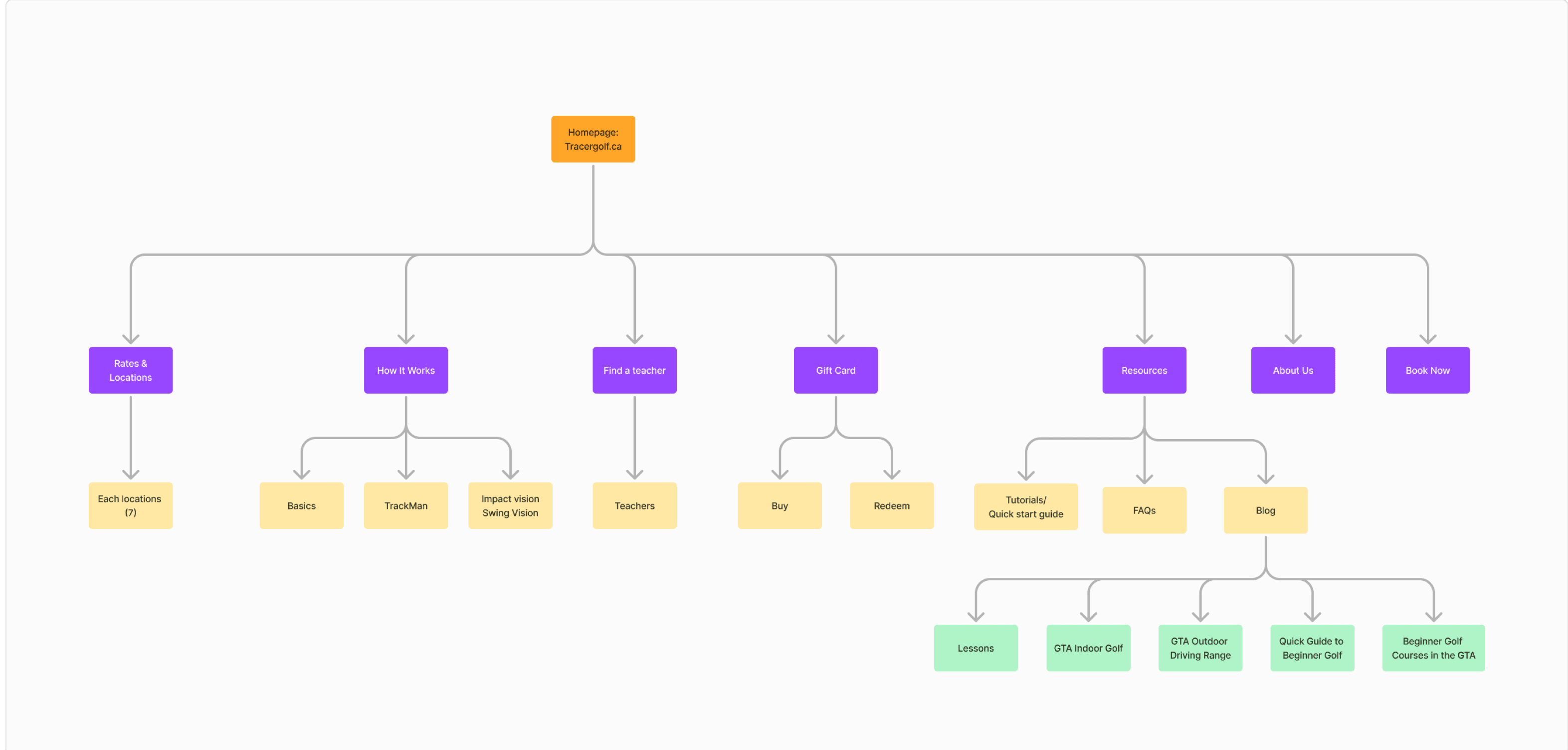
We started by reviewing the site’s information architecture and noticed that some labels and terms might be unclear or unintuitive for users.
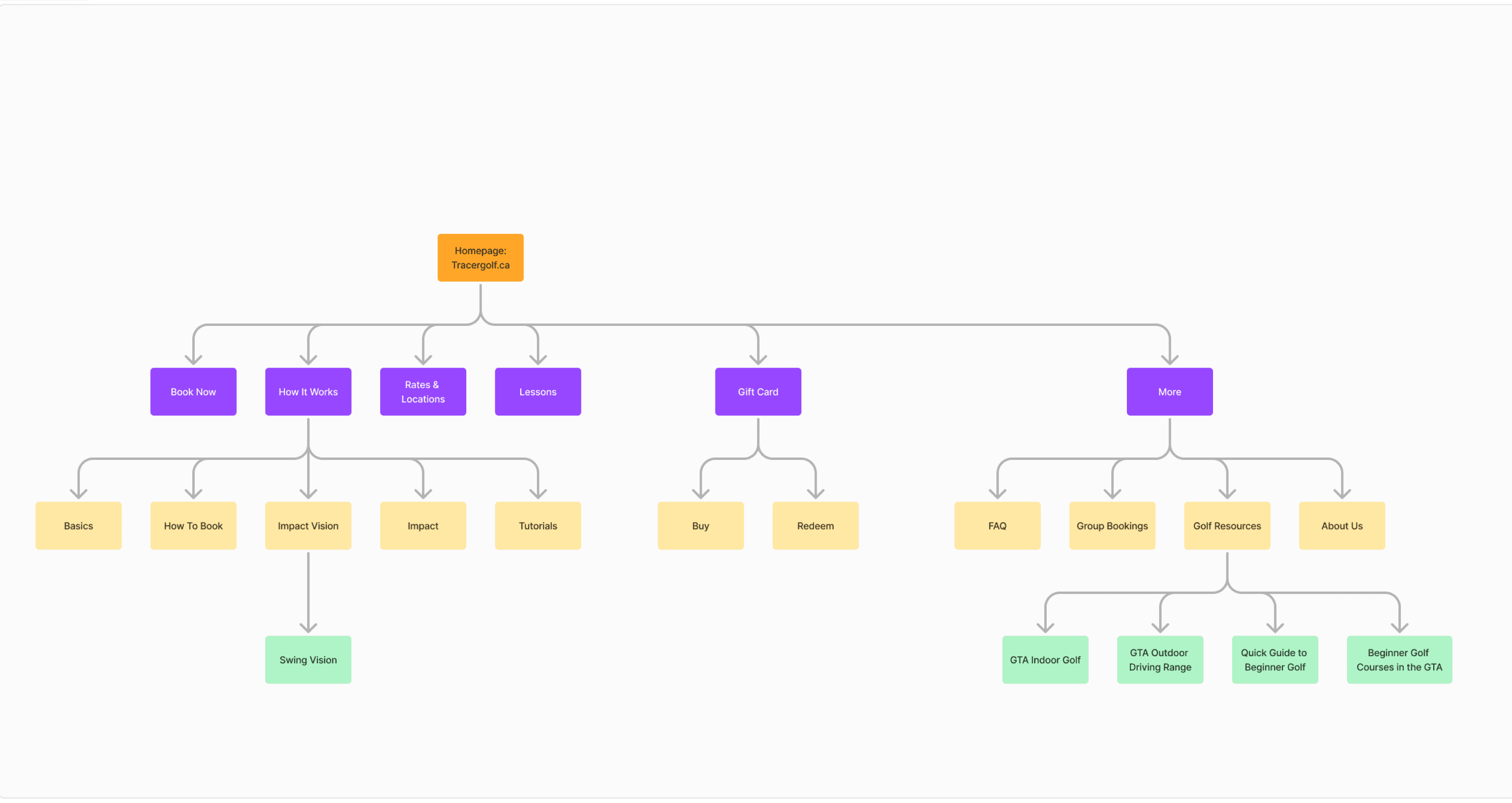
To validate this, we conducted a tree test and card sort to better understand how users naturally group and search for information.
This really helped in giving our client first hand insight into user thought patterns and help build alignment around the need.
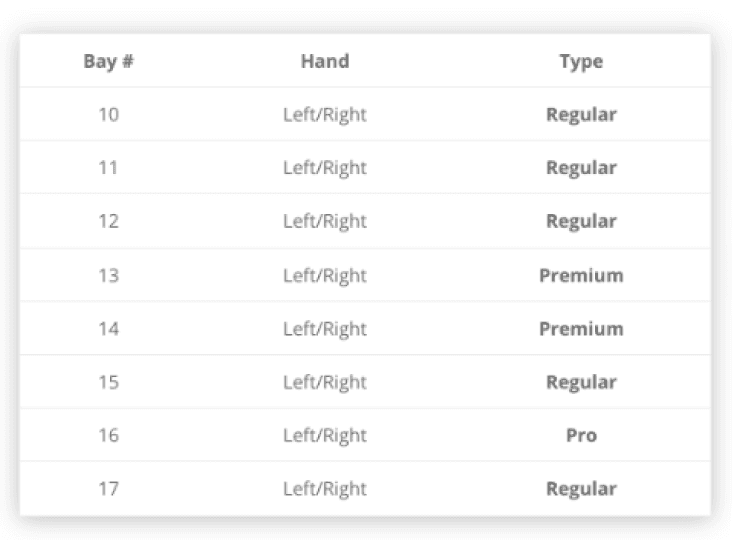
The website went through multiple iterations while we streamlined the three most common user tasks
Booking a tee time at chosen bay
Finding and booking a session with a coach
Redeeming gift cards
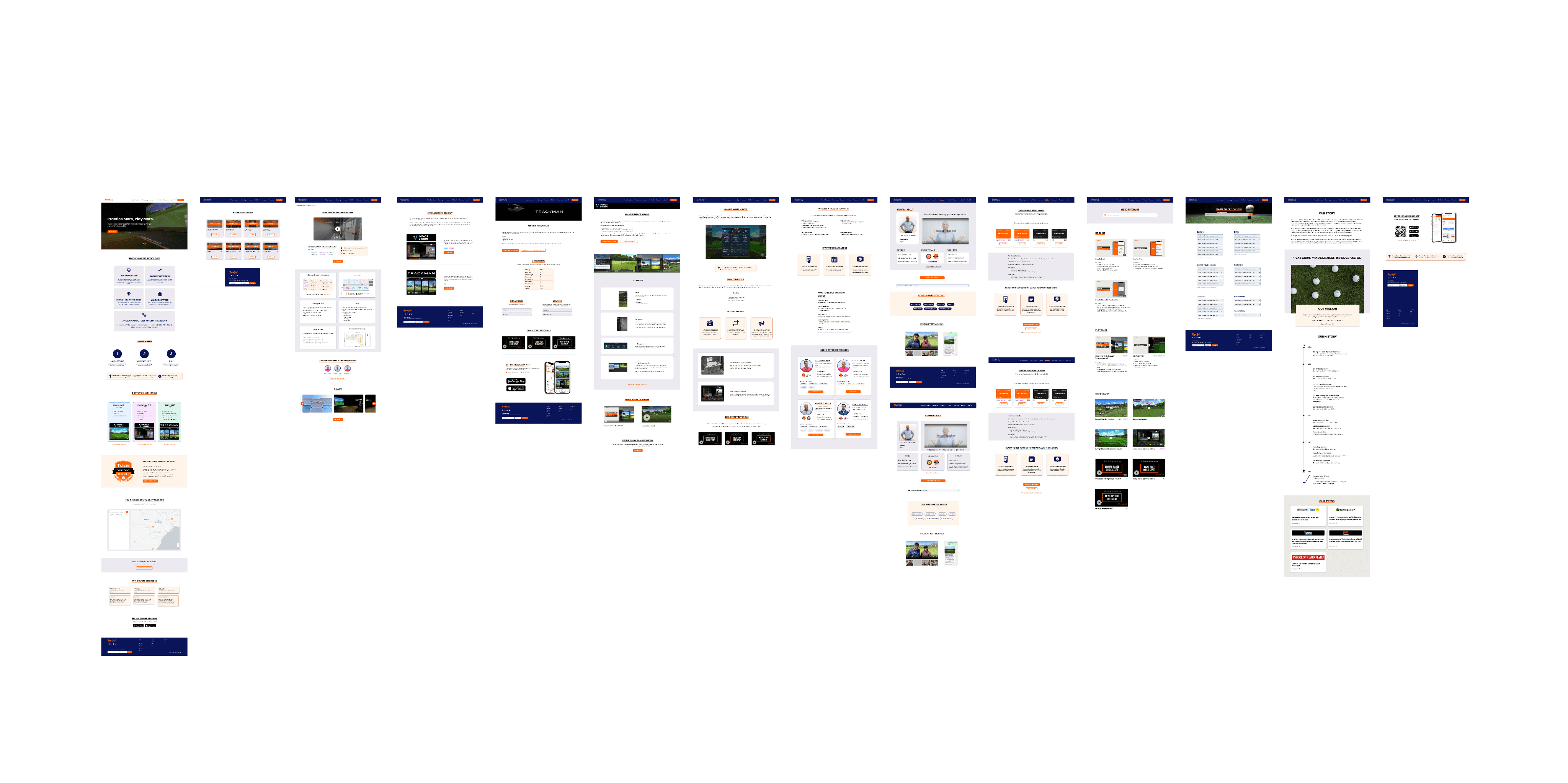
Proposed design
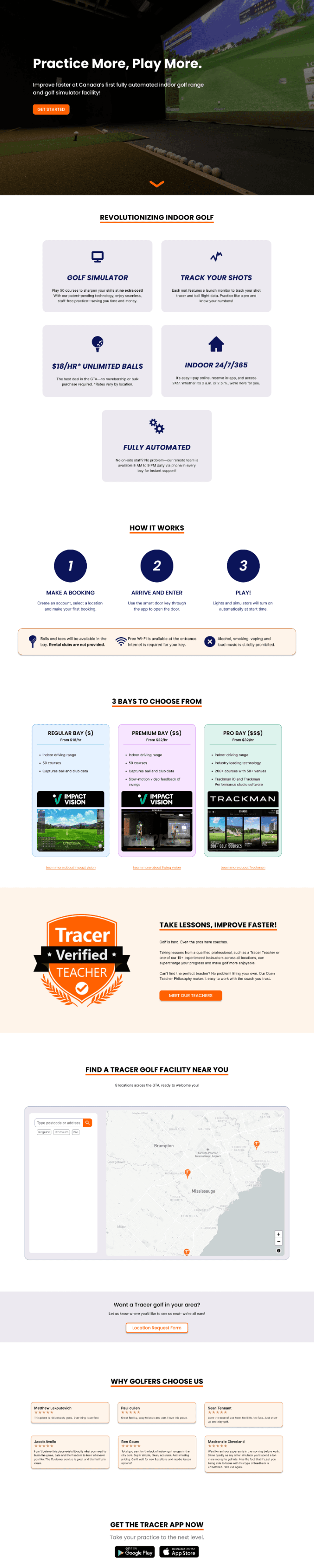
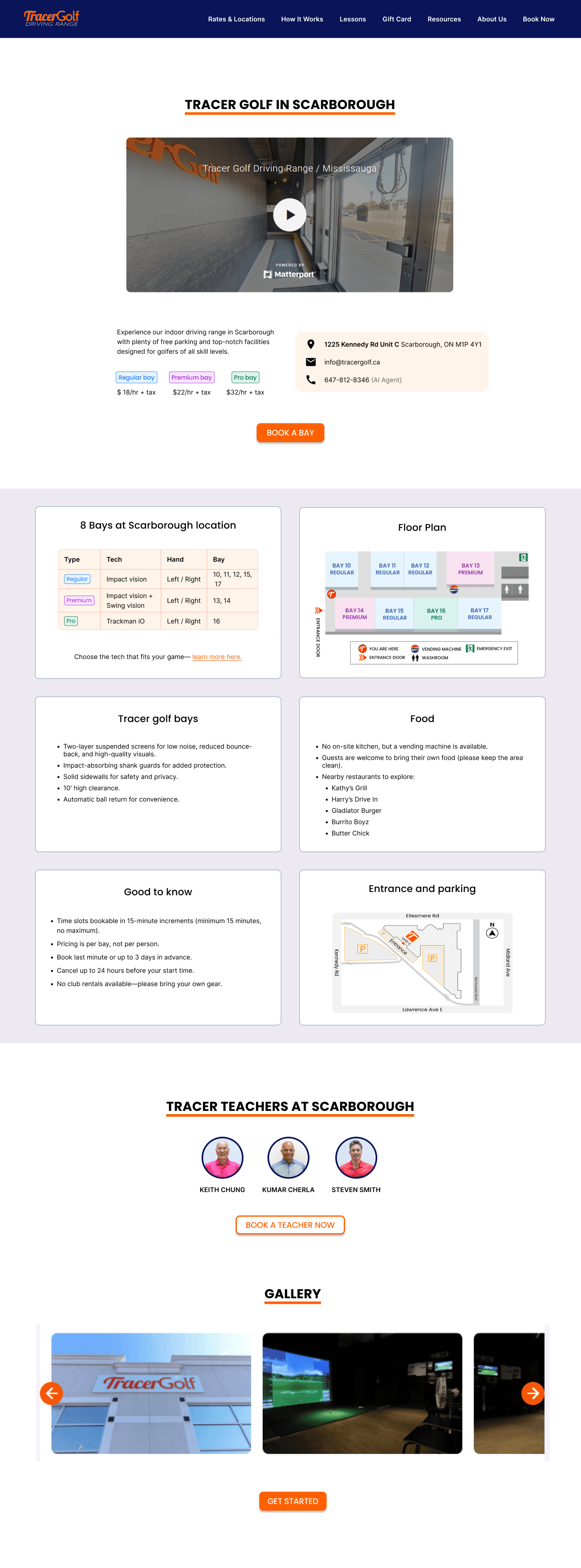
Each screen went through multiple iterations followed by a usability test
Usability test involved users being asked to perform the core flows they would use the website for.
Success
Clear value proposition: All users understood what Tracer Golf is and what it offers directly from the landing page.
Technology section clarity: Users found the pages explaining the simulator technology clear and sufficient.
Information structure: Users appreciated the organization of content and noted that information was easy to grasp because it wasn’t too text-heavy.
Concerns
CTA confusion: Users struggled to identify how to begin the booking and redeem gift card CTAs.
Booking flow complexity: Tasks like booking a coach or redeeming a gift card were still too complex, especially when transitioning from the website to the mobile app.
Lack of excitement for beginners: Casual and beginner golfers felt the site didn’t engage them enough or build excitement, indicating a need for further UI and visual exploration. However core users (Avid golfers) were more focused on accessing practical information and did not express the same concern.
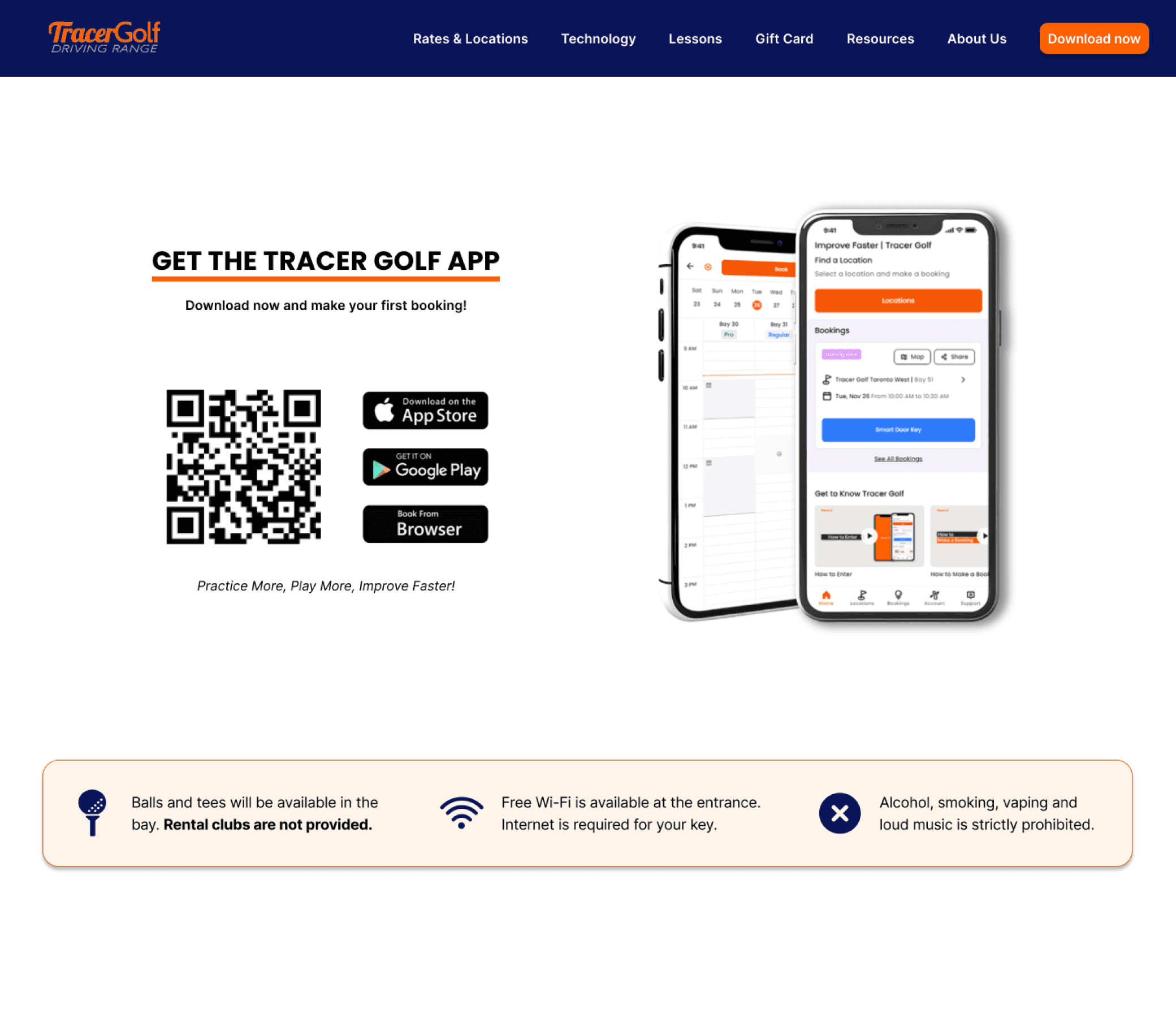
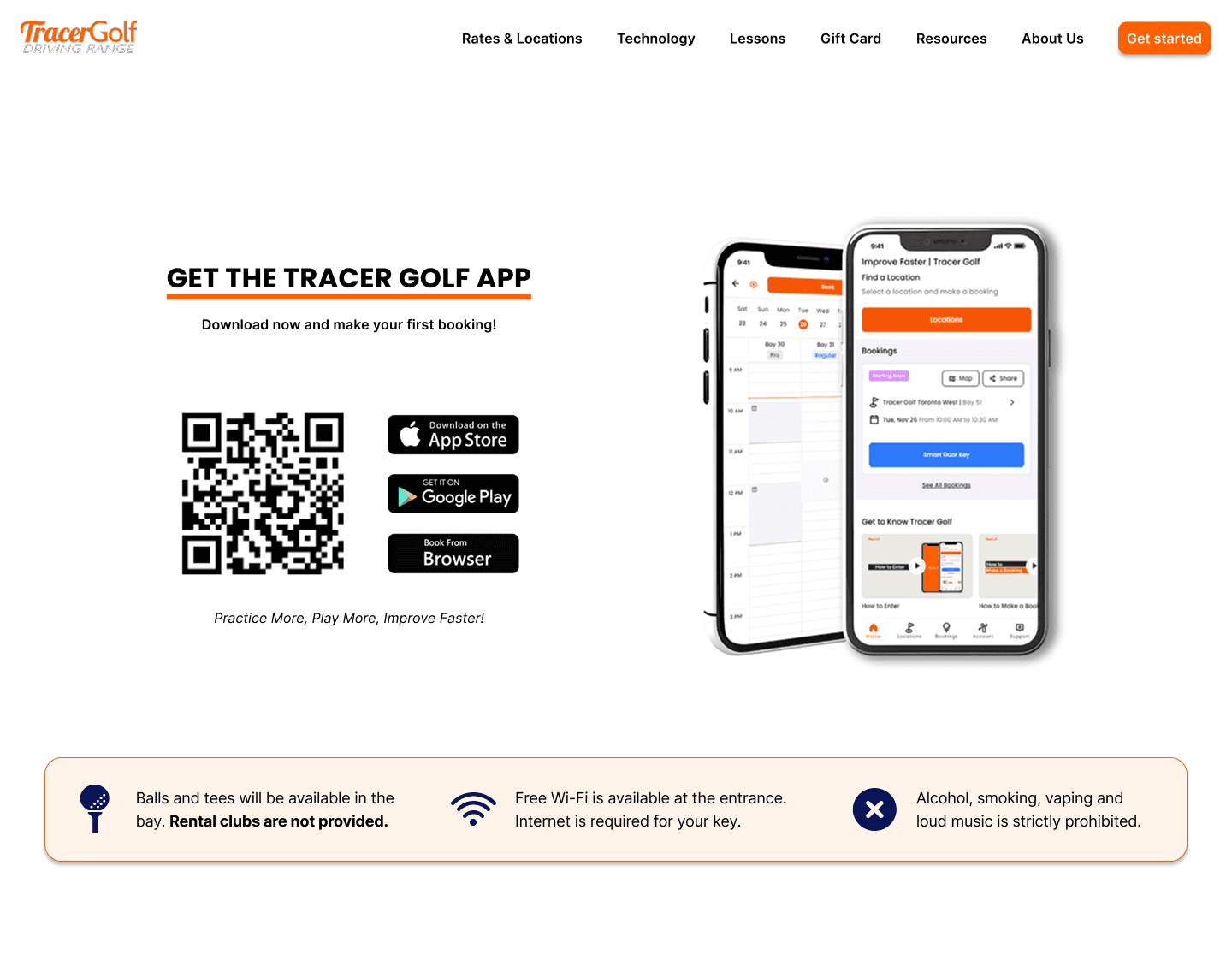
Changed the ‘Download now’ CTA to ‘Get started’ to make the wording more relatable to the action.
Removed Indigo navigation background for cleaner interface.
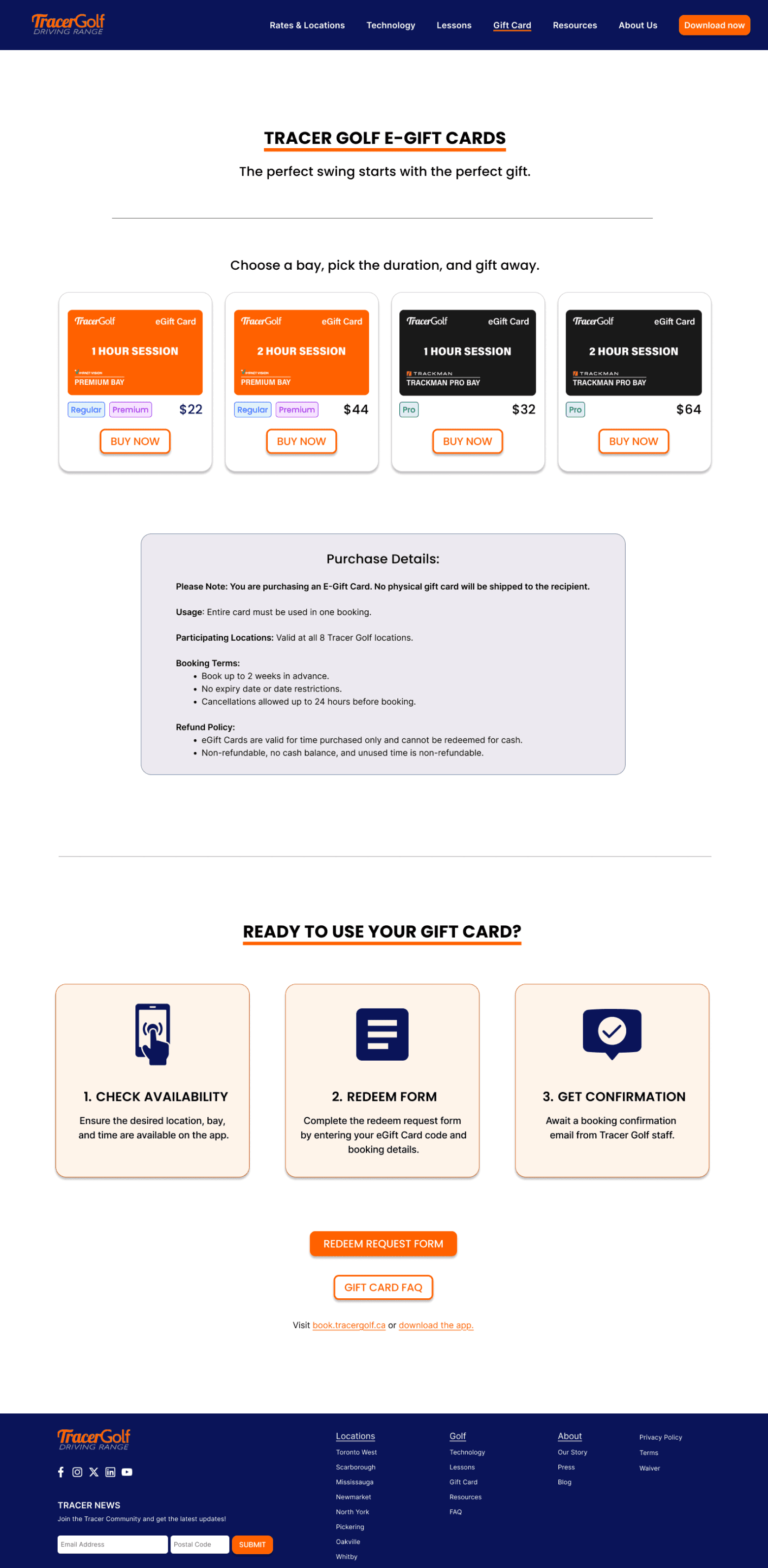
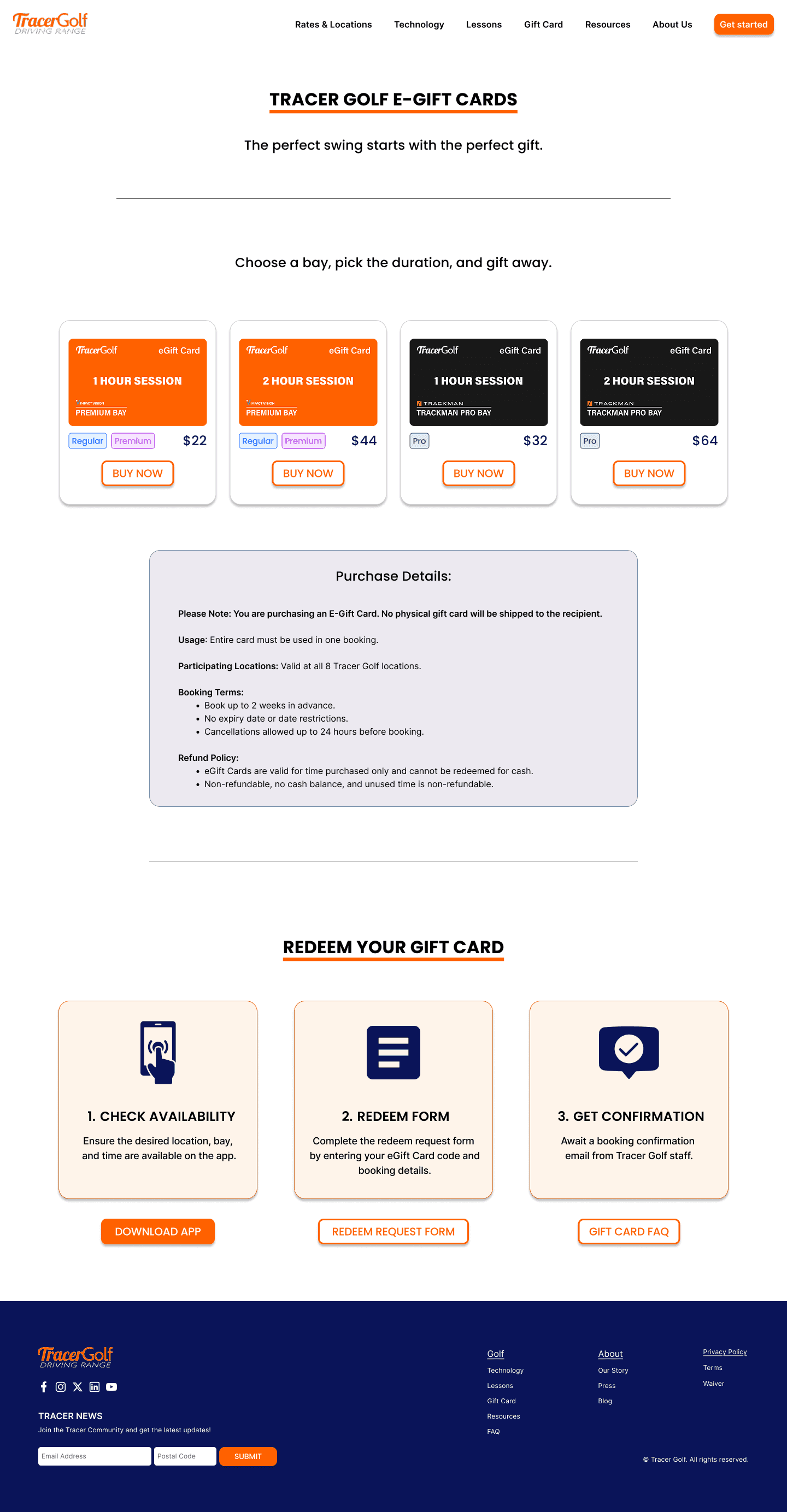
Adjusted CTA placement for clarity and relevance to the step by step actions.
Since the Tracer Golf mobile app was still in development during this project, we were unable to address the part of the user journey that transitions from the website to the app.
However, we made sure to surface all usability concerns during this handoff and communicated them clearly to the client for future consideration.
Next steps
I would focus on building on the foundational work by exploring additional UI improvements and guiding the design of the app experience specifically focusing on streamlining the troubleshooting flow for users.
After redesign is published. I would focus on tracking impact metrics including customer service call volume, user satisfaction and improvement in conversion rates for new member sign-ups.
These indicators will help evaluate how well the redesign supports both user needs and business goals.
Reflection
This project was a valuable learning experience on many levels.
Our design recommendations did not always align with how the client envisioned the redesign. This taught me the importance of staying flexible while still advocating for the user. I learned that no matter how tight time constraints are, presenting alternative solutions along with clear reasoning and potential trade-offs can help stakeholders make more informed decisions.
I really enjoyed collaborating with my teammate. We leaned into our individual strengths and worked efficiently under pressure. While the design phase was highly collaborative, I found myself naturally leading discovery efforts and distilling insights into clear, actionable steps for the team.
About
Work
Contact
© 2026 kaushani Patel. All rights reserved